
Damp Subfloor Termite Risk and Barrier Work, Erskineville
A termite-risk project in a damp subfloor where moisture, mould and timber-to-soil contact increased the importance of both termite management and property maintenance.
Supporting photos from Goliath field work
These genuine Goliath field photographs were selected to match the treatment method and property conditions discussed in this project.
What shaped the treatment plan
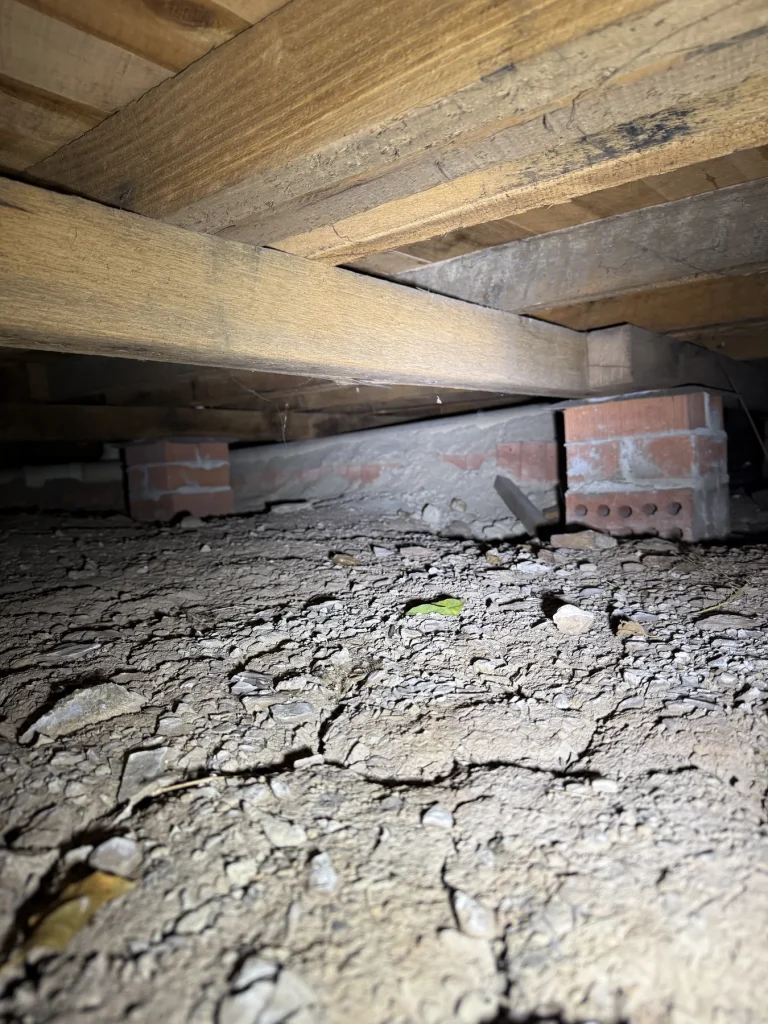
- The subfloor showed damp conditions and mould consistent with limited drying and moisture retention.
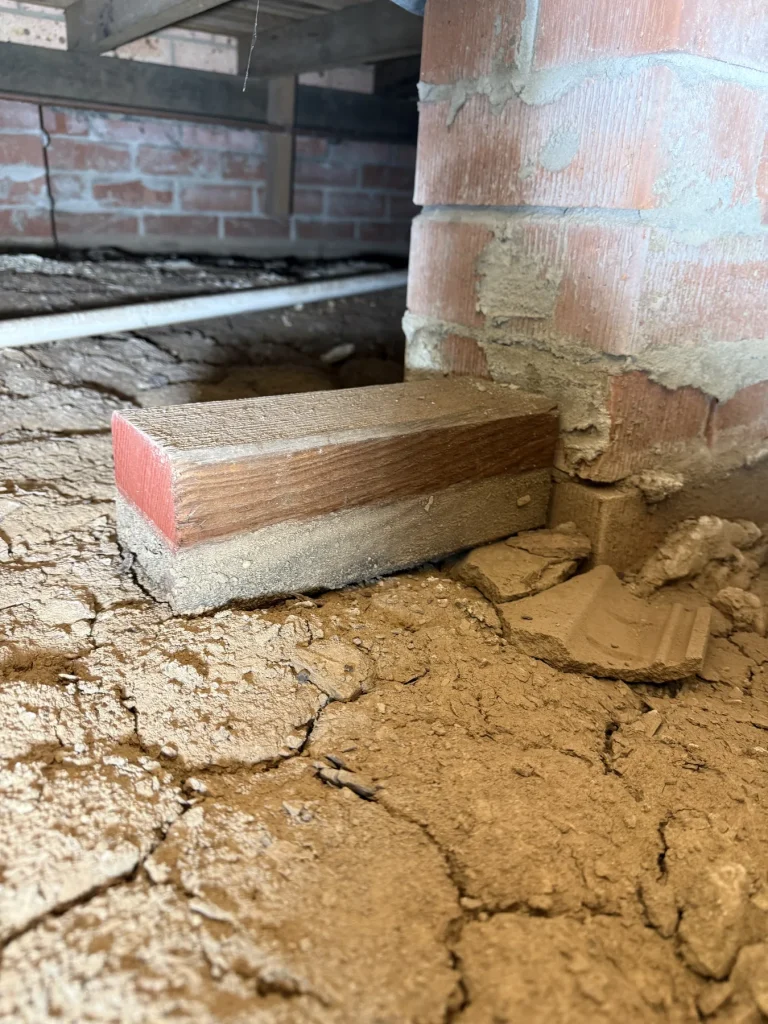
- Timber-to-soil contact created a conducive termite condition that needed to be addressed.
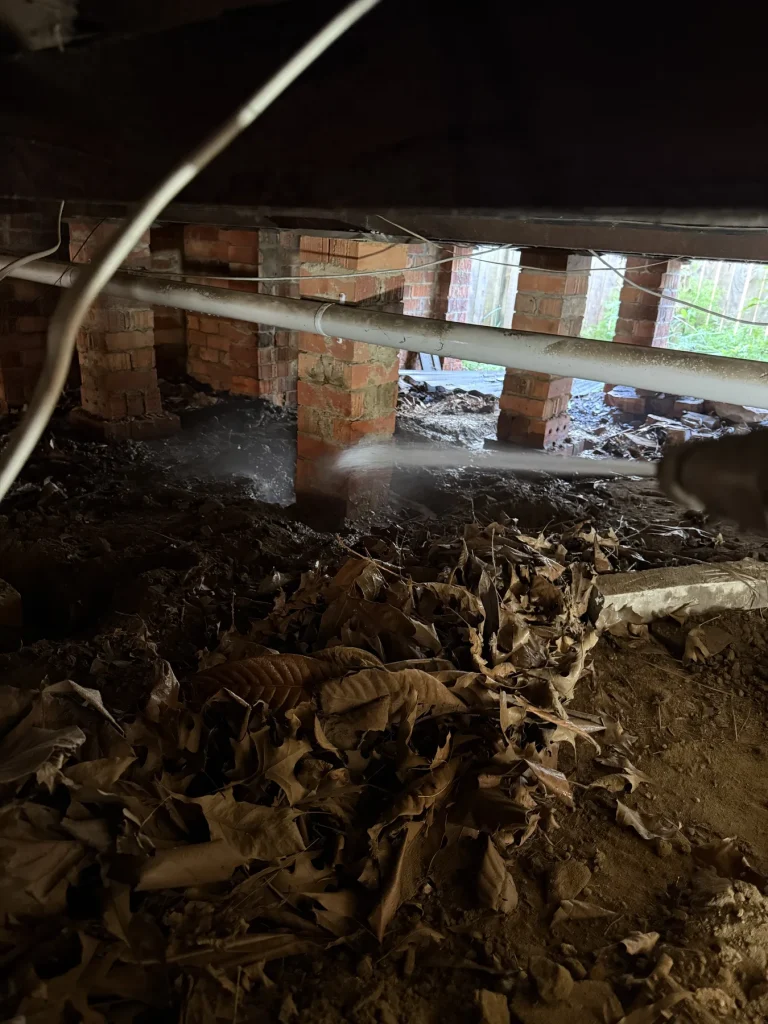
- The termite-management scope had to work around restricted subfloor access and existing building elements.
How the project was approached
- Completed termite-management treatment to the accessible subfloor and external perimeter areas in the agreed barrier scope.
- Treated suitable foundation and soil zones while maintaining accessible inspection areas where practical.
- Documented conducive conditions so the property owner could address moisture and timber contact separately from the chemical treatment.
What this project demonstrates
This project demonstrates why termite treatment and property maintenance often need to work together. Dampness, mould and timber-to-soil contact were separate risk factors that could not be solved by chemical treatment alone, so they were documented alongside the termite-management work.
Ongoing management matters
Barrier work should be supported by property maintenance. Timber-to-soil contact, leaks, drainage problems and persistent dampness should be corrected, with annual termite inspections maintained.